
"and grow"
48000 article(s) found
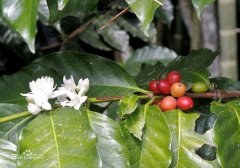
The production zone suitable for growing coffee beans in China can you grow coffee beans in China?
China's coffee producing areas are mainly in Hainan, Yunnan and Guangdong; the northern part of Hainan Island in China, the southern part of Yunnan Province, is located between 15 degrees north latitude and the Tropic of Cancer, which happens to be in this golden zone. The day and night temperature in its coffee is not too strong and bitter in South America, India and Africa, but strong but not bitter, fragrant but not strong, very unique. With a little fruit flavor, it is the top grade of coffee.
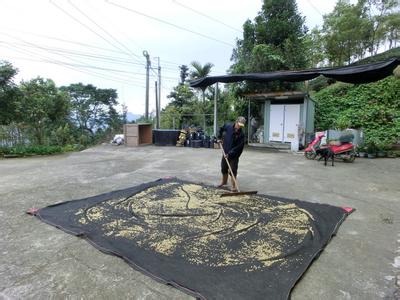
Brief introduction of Santa Barara Manor in Honduras in selected Highland Coffee growing area
Brief introduction of Santa Barara Manor in Honduras in the specially selected Highland Coffee growing area Honduras is a large coffee grower in Central America. 15 of the country's 18 provinces have coffee plantations. More than 100000 coffee growers have created nearly a million jobs for the country. Honduran coffee can lead to multiple levels of flavor depending on the degree of roasting. Medium baking can

How about Harald Harar coffee in the coffee growing area of Ethiopia? Harald Harar Coffee
Professional Coffee knowledge Exchange for more information on coffee beans please follow Coffee Workshop (Wechat official account cafe_style) Harrar-also spelled as Harar- including the easternmost coffee growing area of Ethiopia. It is subdivided into four smaller regions: East Harar, West Hara, Bell and Arsi. Harrar stretches through the vast desert to the border, and to the east is Soma
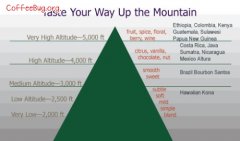
Relationship between altitude of Fine Coffee Bean planting and Coffee Flavor
The influence of geographical location on the flavor of coffee beans is profound. All coffee grows in the tropics, and the altitude at which it grows has a profound effect on the taste of coffee. The tropical belt extends from 30 degrees north latitude to the equatorial regions of the southern mountains that produce the world's truly high-quality Arabica coffee. Central and South America, South Asia and some Pacific islands, south-central Africa is also the most important in the world.

Boutique coffee growing areas: Brazilian coffee growing areas rating
Brazil is significantly lower in elevation than other producing countries in Central and South America, with a greater proportion of estates below 1,000 meters. The landscape here is flat and monotonous, lacks microclimate, and is accustomed to using non-shade tree (insolation) cultivation methods, thus developing Brazil's unique soft bean flavor-low acidity, nutty, chocolate sweet and mellow, but slightly woody and earthy, floral and

Do you know the characteristics of growing coffee in Arabica? what conditions do you need to grow Arabica?
Professional coffee knowledge exchange more coffee bean information Please pay attention to coffee workshop (Wechat official account cafe_style) Coffee comes from the Greek word Kaweh, which means strength and enthusiasm. Coffee tree belongs to the evergreen shrub of Rubiaceae. There are about 40 species of coffee plants, but only Arabica and Robusta are the commercial coffee beans that can be used for human drinking or food industry.

Coffee trees grow around the equator.
Coffee trees grow in tropical or subtropical agricultural gardens centered around the equator and called coffee belts. Most of the coffee production is between the Tropic of Cancer, 25 degrees north of the tropical or subtropical equator and 30 degrees south of the equator. An area with an annual average temperature of 16-25 degrees Celsius, no Frosts Descent and rainfall of 1600-2000 mm. At present, coffee is mainly produced by seven countries.

Where are the coffee growing areas in Brazil? the main coffee growing areas in South Minas.
Professional coffee knowledge exchange more coffee bean information please follow the coffee workshop (Wechat official account cafe_style) Brazil's main producing areas are Minas Gerais MinasGerais, S ã o Paulo Sao Paulo, Bahia Bahia and Esp í rito Santo Espirito Santo these four places account for 90% of the country's exports, our common Santos Santos and Mochiana Mogiana are from
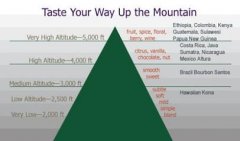
Talk about the influence of altitude on the flavor of coffee
The influence of geographical location on the flavor of coffee beans is profound. All coffee grows in the tropics, and the altitude at which it grows has a profound effect on the taste of coffee. The tropical belt extends from 30 degrees north latitude to the equatorial regions of the southern mountains that produce the world's truly high-quality Arabica coffee. Central and South America, South Asia and some Pacific islands, and south-central Africa are also the most important in the world.

Colombia Matambo Forest Coffee Bean three Coffee growing areas characteristic four Coffee Bean producing areas
Professional coffee knowledge exchange more coffee bean information Please pay attention to the coffee workshop (Wechat official account cafe_style) with the equator as the center, in the tropics and subtropics between latitudes of about 25 degrees north and south, it is the most suitable area for growing coffee. However, good forests can not be cultivated anywhere in the region. The three major coffee growing areas in this section are as follows:
Is it caffeic acid at high altitude? The higher the Haibo, the better the quality of the coffee. Where does the acid in the coffee come from?
The influence of altitude on coffee flavor the influence of geographical location on coffee bean flavor is profound. All coffee grows in the tropics, and the altitude at which it grows has a profound effect on the taste of coffee. The tropical belt extends from 30 degrees north latitude to the equatorial regions of the southern mountains that produce the world's truly high-quality Arabica coffee. Central and South America, South Asia and some Pacific islands, non-

Introduction to the coffee-growing area of Rwanda with 33000 hectares of coffee plantations
Coffee production in Rwanda: there are about 33000 hectares of coffee plantations in Rwanda and 500000 people are engaged in coffee cultivation. With the good natural conditions of high sea http://www.elsteak.com/ pull and fertile volcanic soil, the country's fertile soil and suitable climate are conducive to plant growth, and coffee trees seem to be driven or forced to grow upward, or because they grow too fast.

Effect of open source altitude of coffee bean flavor on coffee flavor
The influence of geographical location on the flavor of coffee beans is profound. All coffee grows in the tropics, and the altitude at which it grows has a profound effect on the taste of coffee. The tropical belt extends from 30 degrees north latitude to the equatorial regions of the southern mountains that produce the world's truly high-quality Arabica coffee. Central and South America, South Asia and some Pacific islands, south-central Africa is also the most important in the world.

What kind of weather conditions do you need to grow coffee beans? which countries have natural bars for growing coffee trees?
At present, coffee has been grown in more than 50 countries in the world, but most of the good coffee beans are concentrated in the equatorial zone between 25 degrees north latitude and 30 degrees south latitude, high altitude, tropical climate and fertile soil. in order to grow full-grained, coffee-rich high-quality coffee beans. Coffee beans are grown all over the world, mainly in Brazil, Colombia, Indonesia and Vietnam.

The growing environment of Costa Rican coffee in the Central American isthmus
Costa Rican coffee is called extra hard beans, and this kind of coffee can grow at an altitude of more than 1500 meters. Altitude has always been a problem for coffee growers. The higher the altitude, the better the coffee beans, not only because the higher altitude can increase the acidity of the coffee beans and thus increase the flavor, but also because the lower night temperature at the higher altitude makes the trees grow slowly, thus from the coffee beans.

What is the effect of altitude on coffee flavor? Coffee bean flavor
The influence of geographical location on the flavor of coffee beans is profound. All coffee grows in the tropics, and the altitude at which it grows has a profound effect on the taste of coffee. The tropical belt extends from 30 degrees north latitude to the equatorial regions of the southern mountains that produce the world's truly high-quality Arabica coffee. Central and South America, South Asia and some Pacific islands, south-central Africa is also the most important in the world.
Boutique Coffee the History of growing Coffee
In fact, the Arabs began to grow coffee in 525 BC, and chewing fried coffee beans became popular in the Arab region. In 890 AD, Arab merchants sold coffee beans to Yemen, and Yemenis made coffee beans into drinks for the first time. In the 15th century, coffee was introduced into Europe, Asia and soon into America. By the 18th century, tropical and subtropical regions around the world were widespread.

Coffee growing knowledge
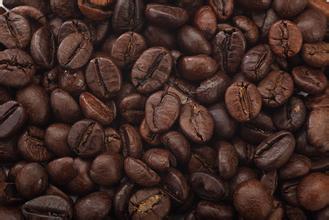
Coffee is a drink that gives the public the impression of being black, bitter, sleepless, and excited. The coffee beans we see in coffee shops are dark brown and belong to roasted coffee beans, while the color of coffee liquid is amber. Coffee comes from coffee beans, which in turn are harvested and processed from the fruits of trees. Coffee growing habits: coffee
Learn about the history of growing coffee
In fact, the Arabs began to grow coffee in 525 BC, and chewing fried coffee beans became popular in the Arab region. In 890 AD, Arab merchants sold coffee beans to Yemen, and Yemenis made coffee beans into drinks for the first time. In the 15th century, coffee was introduced into Europe, Asia and soon into America. By the 18th century, tropical and subtropical regions around the world were widespread.